
Last updated November 15, 2026
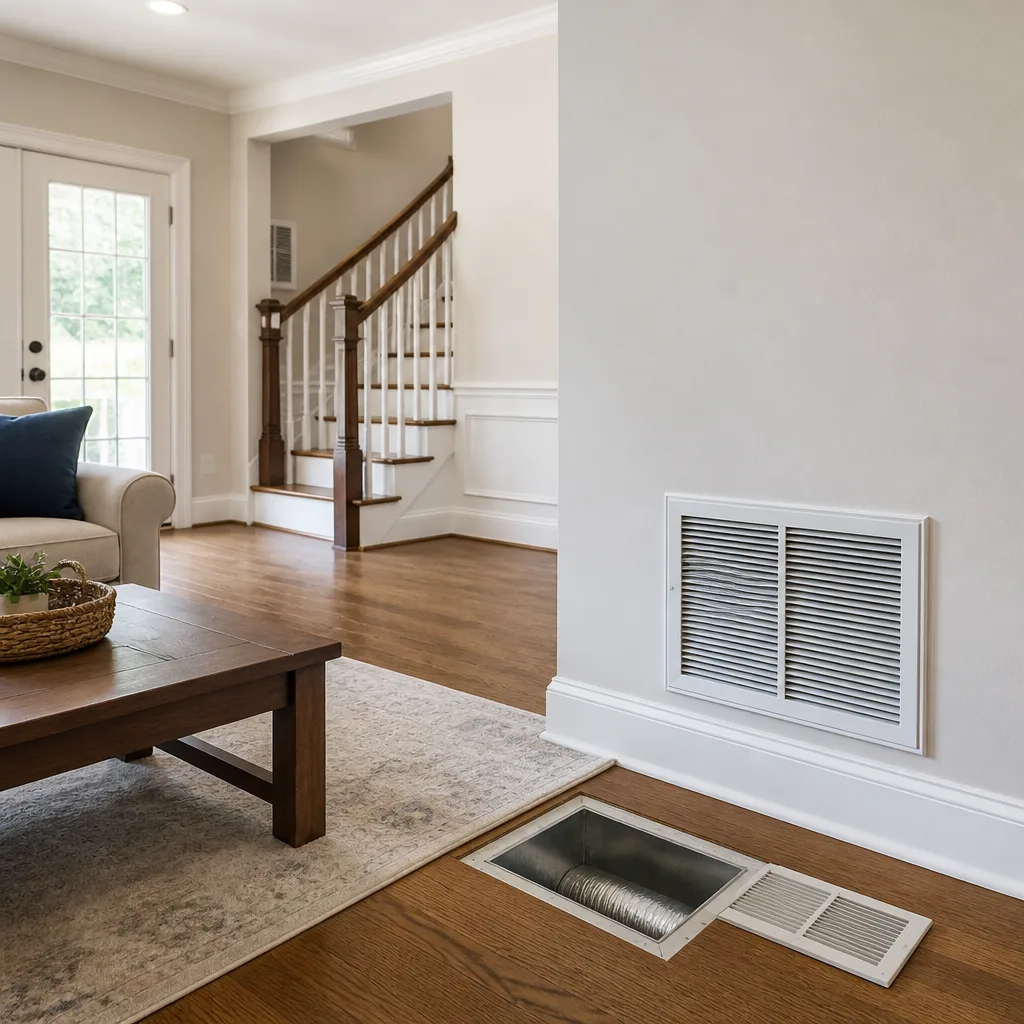 Whole-home duct cleaning
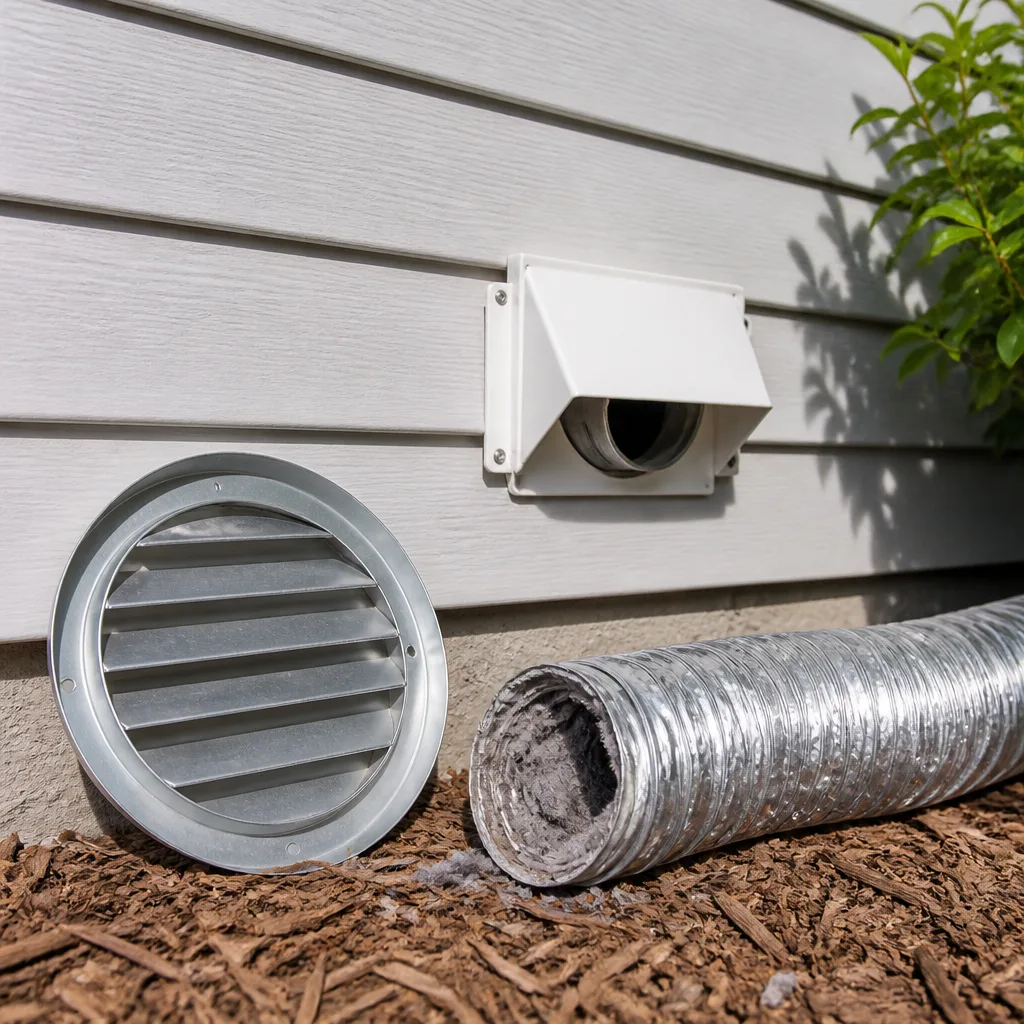 Dryer vent cleaning
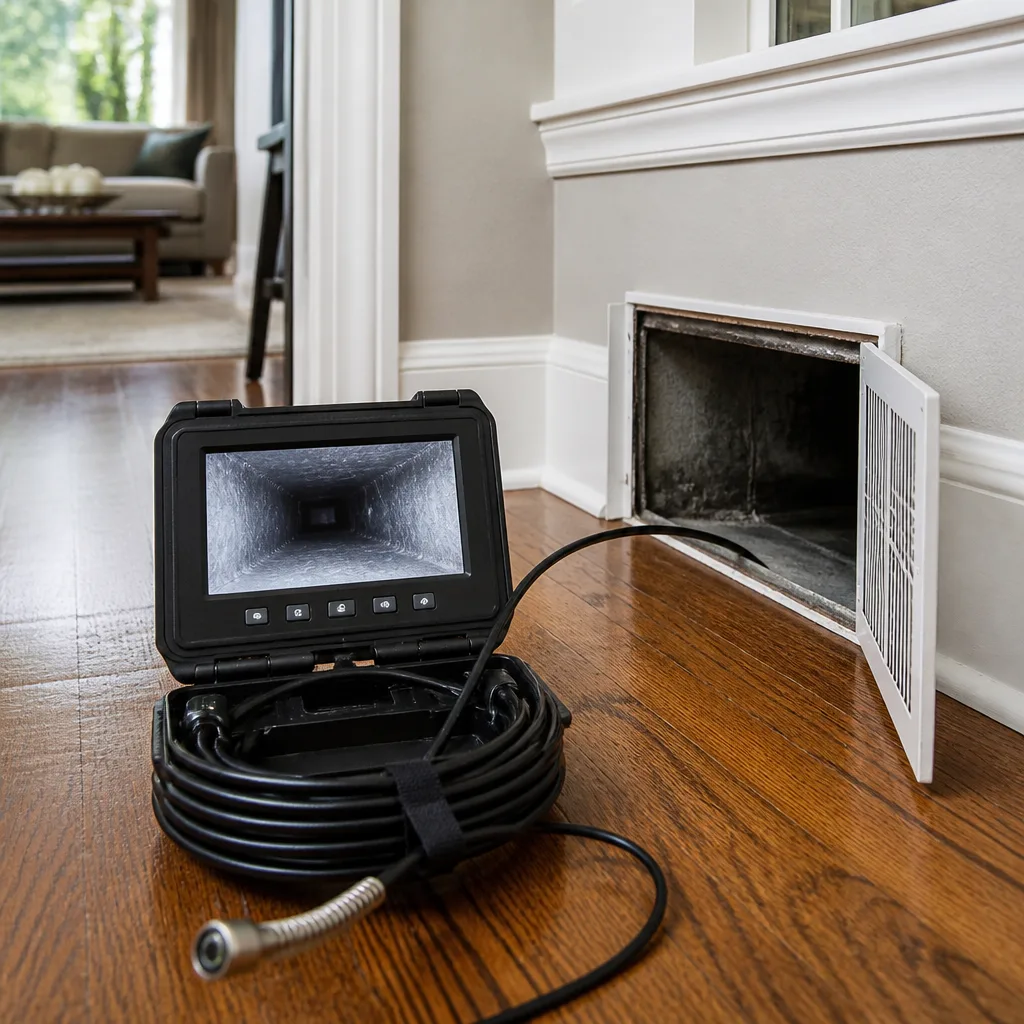 Camera inspection
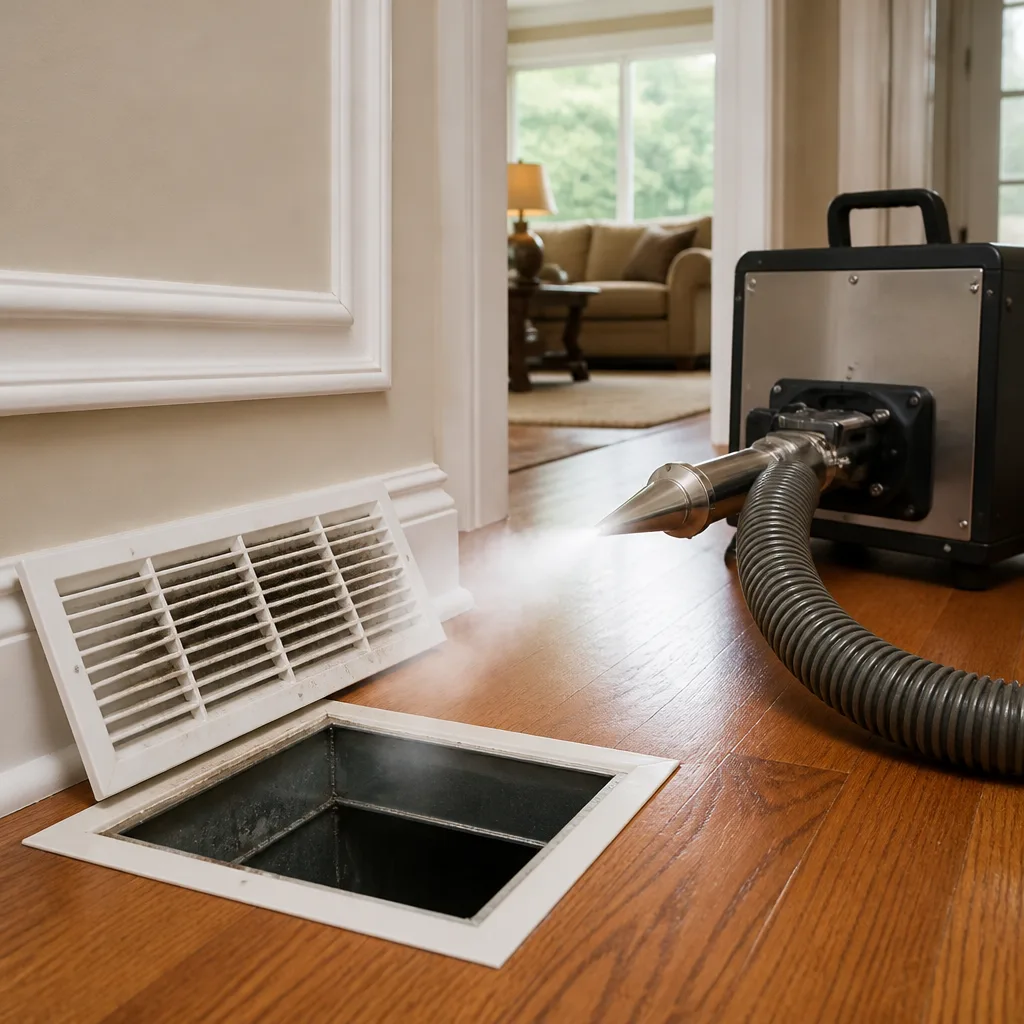 Sanitizing & deodorizing
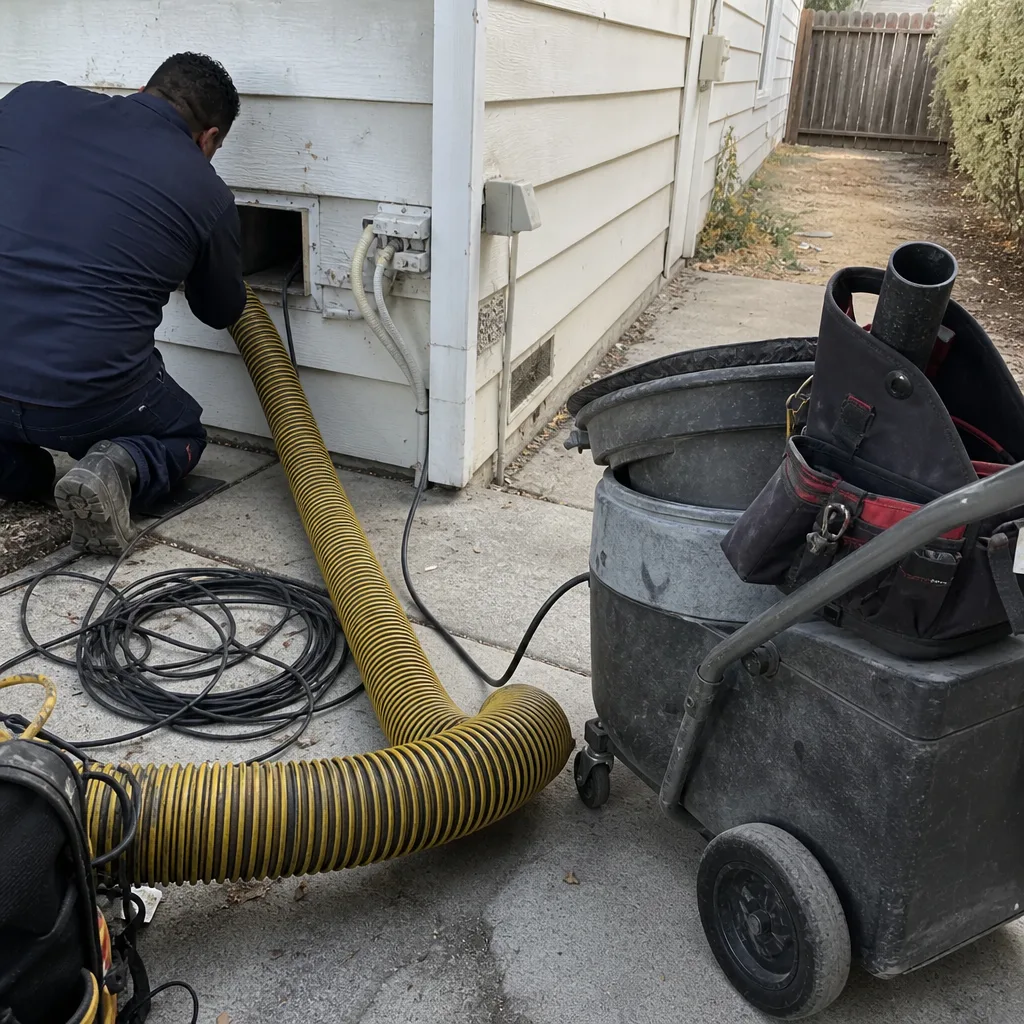
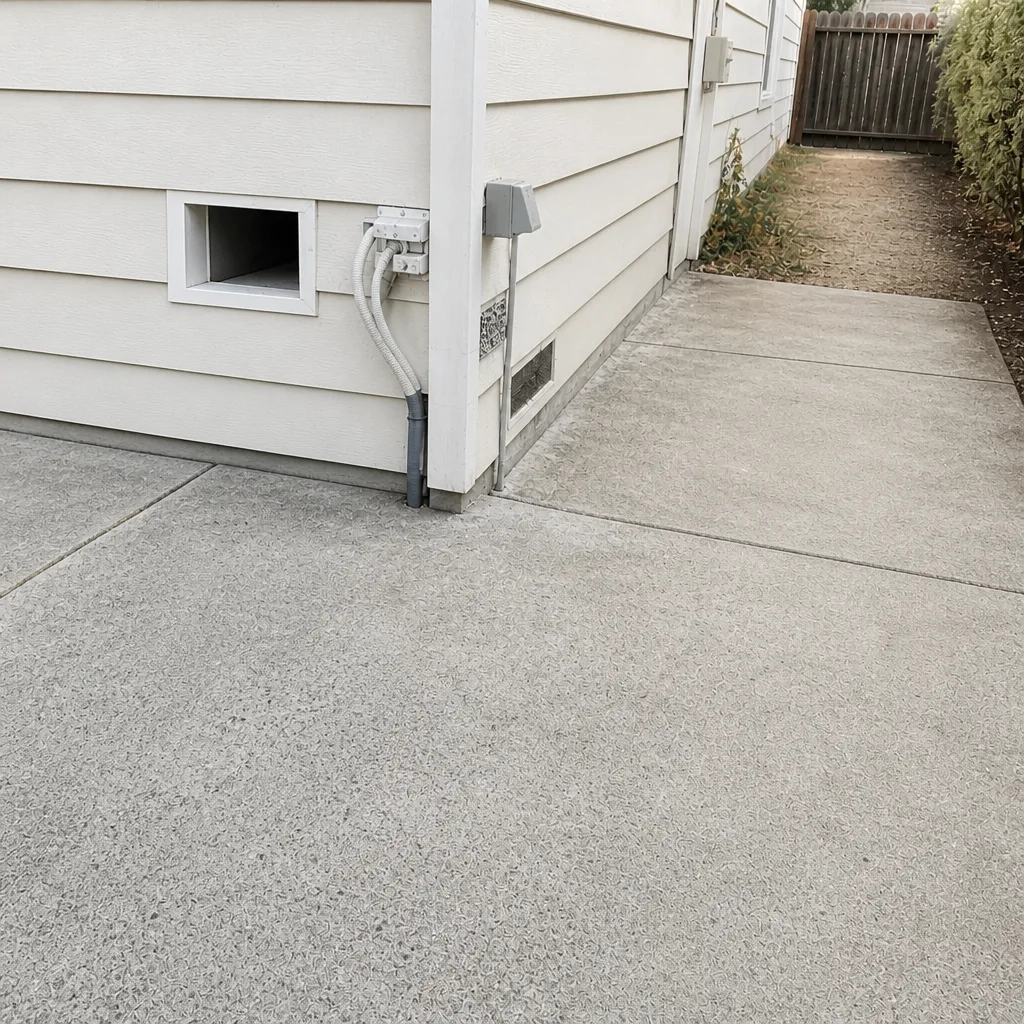
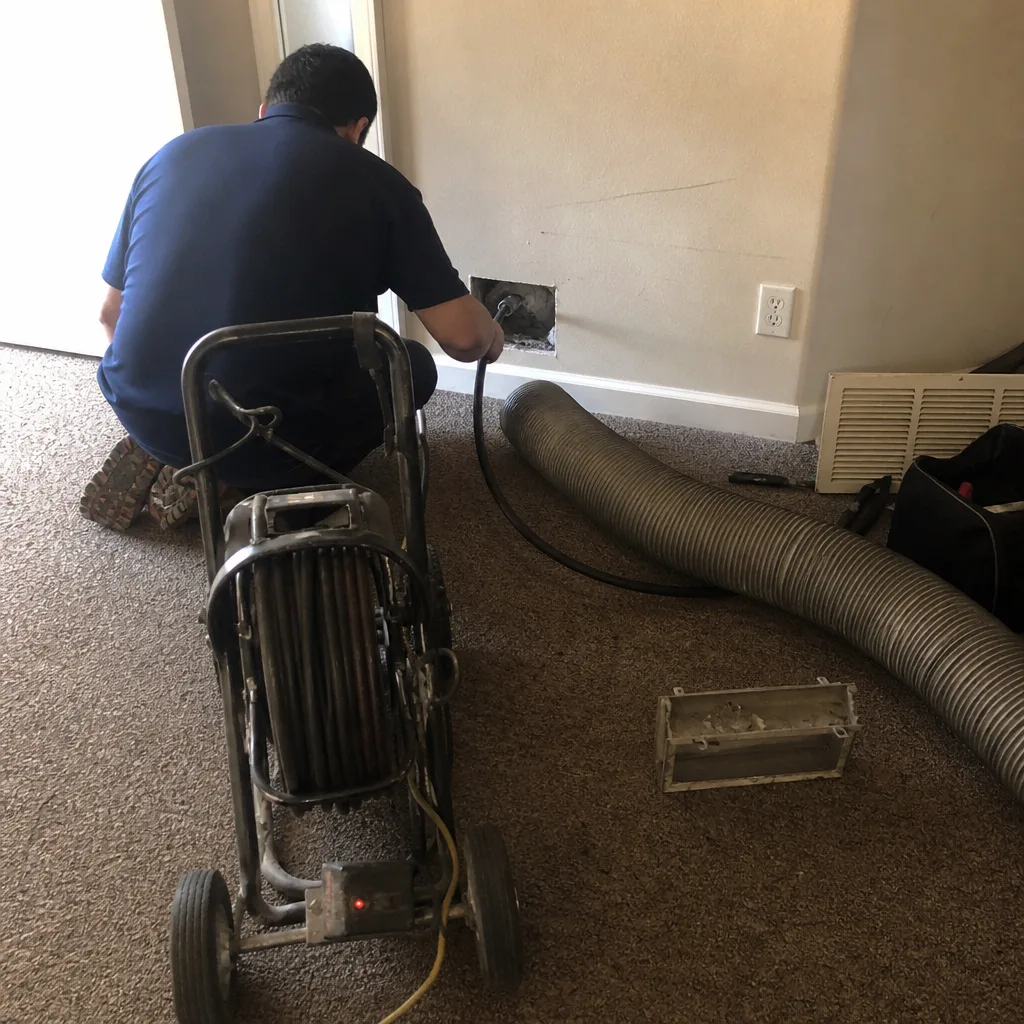
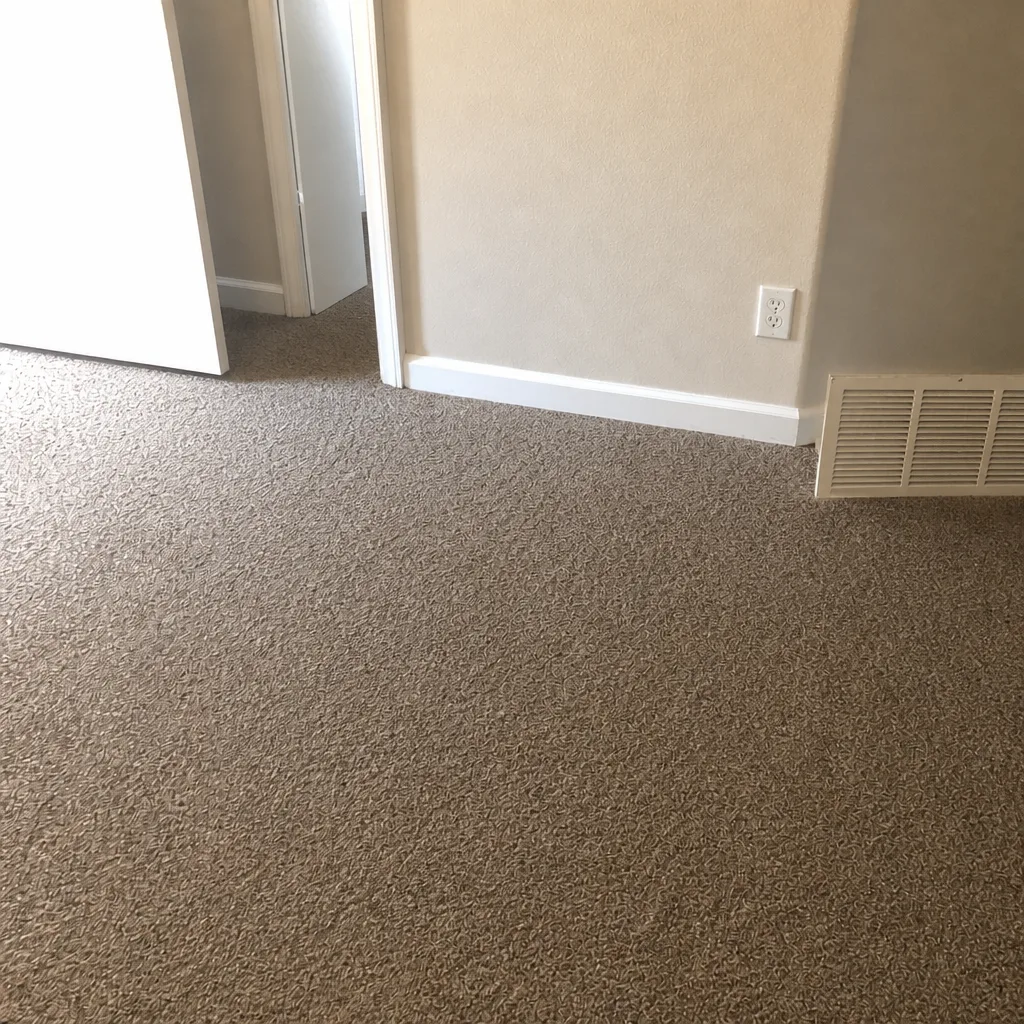
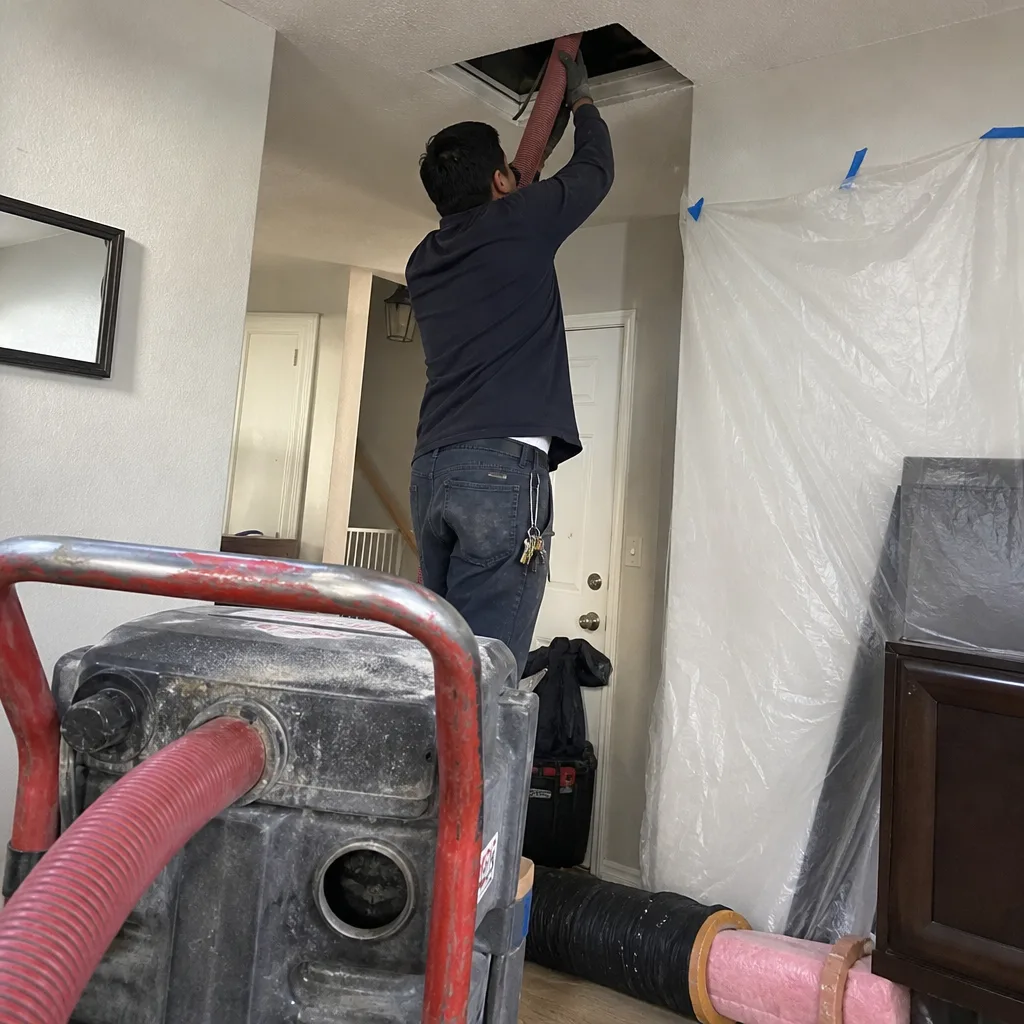
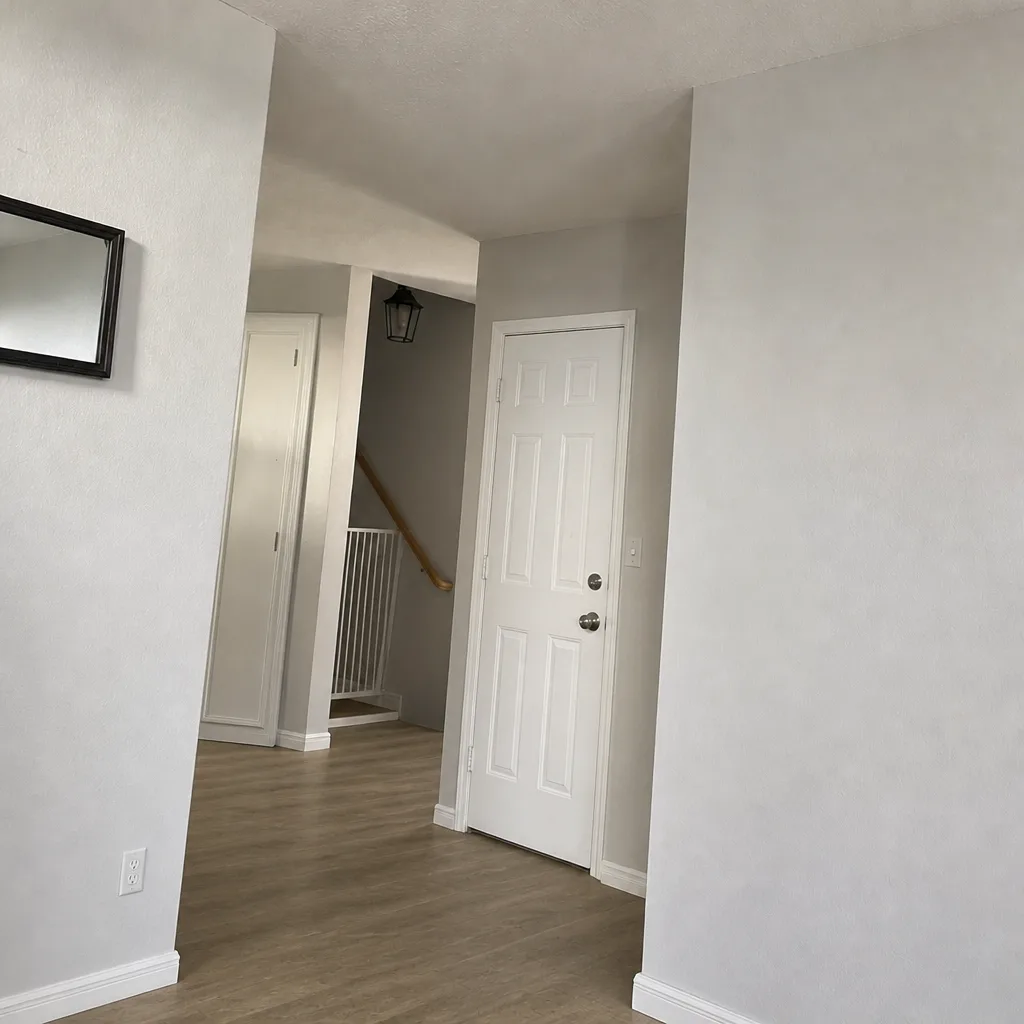
Whole-system duct and dryer vent check with before-and-after photos - you see exactly what came out of your vents
That "$99 whole-house special" is a bait ad - the real number appears once they are in your hallway, or the "clean" is a shop-vac at the register. We photograph the inside of your ducts before and after instead.
Air Duct Cleaning Maintenance Checklist for Tracy Homeowners
The standard advice, “clean your ducts every three to five years,” tells you almost nothing about what’s actually happening inside your system between visits. A filter swap schedule is not a maintenance plan. Dust, pollen, pet dander, and construction debris move through ductwork in patterns, and those patterns leave evidence you can read at the register. This guide translates the inspections a technician performs into homeowner-level checks you can run quarterly, shows you how to track filter loading rate as a diagnostic signal, and explains which Tracy seasonal events should trigger an unscheduled look. It’s the checklist we’d hand a Tracy homeowner if they asked what to watch between professional cleanings.
Quick Answer
A duct maintenance checklist for a Tracy home is a quarterly register inspection plus a filter-loading log: check each vent for lint pattern, discoloration, and airflow strength, note how fast filters load, and record last cleaning date and filter MERV rating. Schedule a professional system assessment when you see oil-film staining, uneven airflow between rooms, or after major renovation or attic work.
Styles & brands we work with
- Whole-home duct cleaning
- Dryer vent cleaning
- Camera inspection
- Sanitizing & deodorizing
Table of Contents
- Why “Every Three to Five Years” Falls Short
- The Quarterly Register Inspection Protocol
- Filter Loading Rate as a Diagnostic Signal
- Tracy Seasonal Triggers for an Unscheduled Inspection
- What to Record and Keep on File
- Maintenance Check vs. System Assessment
- Reading Airflow Asymmetry and Duct Repair Signals
- Building Your Annual Duct Schedule
Why “Every Three to Five Years” Falls Short
Cleaning frequency advice is an average across every home in the country, and it assumes every house has the same filter discipline, the same occupancy, and the same number of pets. That’s never true. A household with two cats, a woodworking hobby, and a filter changed twice a year is in a different condition at the three-year mark than a retired couple with no pets and a filter changed every ninety days.
What matters more than the calendar is what’s happening between cleanings. Ductwork accumulates debris at a rate you can actually observe. When a filter loads in three weeks, that’s telling you something is contaminating the airstream ahead of it or downstream of it, or that your filter is undersized for the particle load. When a filter lasts three months, the system is breathing clean. Both scenarios are data.
Here in the valley, we’ve seen homes in newer construction around the Tracy Hills area and older homes closer to downtown behave completely differently on the same five-year schedule. New construction often has loose tape joints and construction dust baked into the system for years. Older homes may have original sheet metal returns with less leakage but more accumulated dust in the runs. Neither of those is a cleaning-frequency question. They’re inspection questions.
The right frame is this: have a professional air duct cleaning done on a schedule that matches your home’s evidence, and run a quarterly homeowner inspection in between. That’s the maintenance plan. The calendar is the tail, not the dog.
The Quarterly Register Inspection Protocol
Every three months, take twenty minutes and inspect your supply and return registers. You’re looking for evidence, not perfection. The goal is to see what’s coming out of the system before it accumulates to the point of a larger remediation job.
What you’ll need
- A bright flashlight
- A step stool (never a chair)
- Your phone for photos
- A notebook or a note on your phone to log dates
The step-by-step protocol
- Turn the system off at the thermostat. Static electricity and moving air both make it harder to see debris patterns accurately.
- Remove the register grille on a few representative vents: one in a bedroom, one in the main living area, one return. Note which vents you checked.
- Look straight up into the boot and duct throat with the flashlight. Photograph what you see.
- Check the register face for lint accumulation patterns. A light, even dust film that wipes clean is normal. Dark clumps around the perimeter or in one corner of the register mean airflow is concentrated unevenly.
- Look for discoloration rings. Yellowing or brown coffee-colored halos on the duct lining indicate moisture tracking or oil-film accumulation. That’s a system assessment signal, not a cleaning signal.
- Test airflow by hand or with a tissue. Hold your hand near each supply register in a room. Airflow should feel roughly similar across rooms of similar size. If one room’s vent pushes noticeably weaker air, note it.
- Wipe a small section of the register with a white paper towel. Photograph the towel. That’s your visual reference for next quarter.
- Reinstall the grille and relabel it if it’s now out of sequence. Log the date and any notes in your file.
What the patterns tell you
- Even, light dust on every register: Normal. Keep to your schedule.
- Heavy lint clumps in one or two rooms only: That branch of ductwork is loading faster, often because it’s the closest run or the one with the least airflow. Note it and check again in 30 days.
- Discoloration rings or oil staining: Possible moisture or contaminant source. This warrants a technician assessment, not another wipe-down.
- Airflow asymmetry of more than about 25% between similar rooms: Likely a damper position, a crushed flex run, or a disconnected joint. Duct repair territory, which is a separate service from cleaning.
- Fuzzy or fibrous debris shedding from the register face: The duct liner or the flex duct interior may be degrading. Get it looked at.
When you find oil staining, degrading liner, or airflow loss that doesn’t respond to damper adjustment, you’re past the homeowner-checklist phase. That’s when a professional assessment matters.
Filter Loading Rate as a Diagnostic Signal
The filter is the single best proxy you have for duct system cleanliness between professional cleanings. It’s also the cheapest instrument in your toolkit. The trick is measuring loading rate, not just remembering to change it.
How to measure loading rate
- Write the install date on the filter edge in pencil. Not on your phone, on the filter itself. The next filter swap happens on a different day of a different week, and a pencil mark is the fastest thing to read.
- Go until the filter is visibly loaded. Don’t preemptively change it at 30 days just because the box said to. Change it when it’s actually gray-brown and matted.
- Note the number of weeks it took to get there. That number is your loading rate.
- Repeat for three cycles. Three data points give you a baseline.
Reading the number
- Under about 3 weeks: Unusually fast loading. Could mean a filter that’s undersized for the system, a return that’s pulling from a dusty space (attic, garage-adjacent closet, or a return near a litter box), a leak downstream pulling soil into the airstream, or ongoing construction dust. Investigate before writing it off as “just a dusty house.”
- About 4 to 8 weeks: Typical for a busy household with pets or a lot of foot traffic. Normal range.
- About 12 weeks: Clean system, low occupancy, or a filter with a much higher dust-holding capacity than expected. Note the brand and MERV rating on the filter so you can compare the same filter against itself.
Filter rating matters too
Loading rate only means something if you compare like with like. A MERV 8 filter and a MERV 13 filter load at very different rates because the media density is different. Log the MERV rating on the filter frame every time you swap it. If you’re upgrading filtration because of allergy sufferers in the home, Honeywell and Aprilaire media filters both hold a specific rating across their line, and they behave predictably enough that your loading log stays accurate after a change.
If you’re not sure what MERV your system is designed for, that’s a question for a technician. Too high a MERV can restrict airflow on an older system and cost you more in blower strain than you gain in filtration.
Tracy Seasonal Triggers for an Unscheduled Inspection
Some events in a Tracy home push enough debris into the system to reset the maintenance clock. When any of these happen, add an unscheduled register inspection within two weeks rather than waiting for your quarterly slot.
Post-harvest dust events
The agricultural activity that surrounds Tracy means there are weeks each year when visible particulate in the outdoor air is higher than usual. If you notice a film of fine dust settling on interior surfaces over a day or two, that’s the sign to check registers early. The system has been pulling that material through on every draw. Windows open during those stretches make it worse.
Post-renovation
Any drywall, flooring, cabinet, or paint work generates airborne particulate that a normal filter catches only partially. Drywall dust is especially fine and it settles inside ductwork where a filter can’t reach it. After any renovation, do a register inspection within two weeks and expect to find heavier loading in the rooms nearest the work. If the renovation involved tear-out, plan on a professional cleaning sooner rather than later.
After roofline or attic work
Attic work is the sneaky one. If you’ve had a roofer, an insulation contractor, or an HVAC tech up in the attic, any flex duct in that space can be disturbed. A disconnected flex run or a crushed section is invisible from the living space until you notice a room that’s grown noticeably weaker. Check every register after attic work and pay closest attention to rooms at the perimeter of the house.
Wildfire smoke weeks
During active regional smoke events, the system is working harder than usual and pulling more fine particulate. The filter is your first line of defense, but it saturates faster during those stretches. If your loading rate jumps during a smoke week, that’s expected. What matters is whether it returns to baseline after the smoke clears. If it doesn’t, dig into why.
After moving in
New homes in Tracy come with a maintenance history you can’t fully reconstruct. If you’ve recently purchased, run a full register inspection and a filter loading cycle before declaring the system clean. Prior owners often skipped filter changes in the last six months before a sale, and the return plenum tells the story.
What to Record and Keep on File
The single biggest advantage you can give the technician who inspects your system is a paper trail. When you call, most homeowners start from zero. When you have records, the technician can diagnose much faster and you’ll get a more precise recommendation. Here’s the file to keep, either on paper or in a notes app.
The home duct log
- System age and basic specs. Note where the air handler is, the approximate installation year (from the data plate on the unit, which lists the manufacture date), and the model number.
- Last professional duct cleaning date and which company performed it.
- Last professional dryer vent cleaning date. This one’s separate and equally important.
- Filter MERV rating history. When you changed rating, why, and what brand and model you used.
- Quarterly register inspection notes. Date, which vents checked, and any anomalies.
- Filter loading rate baseline. The three-cycle average you established.
- Any duct repair performed and what was sealed or replaced.
- Any renovation, attic, or roofline work performed on the home, with dates. These are your trigger events.
- Any known moisture issues in the attic, crawl space, or near the air handler.
Photos matter more than you’d think
Save the quarterly photos to a dedicated album on your phone with the register location in the filename or the caption. A technician can look at two photos taken a year apart and diagnose in five minutes what a walk-through might miss. This is why we push transparency so hard: when you can see what was inside the duct before and after, you know the work was actually done. The same principle applies to your own records.
Maintenance Check vs. System Assessment
These two terms get used interchangeably and they shouldn’t be. Knowing which one you need saves you both time and money.
The maintenance check (homeowner-level)
This is everything in the quarterly register inspection protocol above. It’s the filter swap, the visual check at each vent, the loading rate log, and the file you keep. You can do it yourself, and you should. It doesn’t require tools beyond a flashlight and a step stool, and it takes about twenty minutes. The output is data and a decision: keep the schedule or escalate.
The system assessment (technician-level)
This is the step where the system gets opened and measured. That means a technician inspecting inside the ductwork with a camera, measuring static pressure at key points, checking the blower, and confirming whether duct joints are sealed, whether flex runs are intact, and whether the return plenum needs cleaning. Commercial-grade equipment comes into play here, both to see the interior and to capture what gets dislodged.
When does a maintenance check become a system assessment? These are the trigger signals:
- Discoloration rings or oil staining inside any duct
- Visible liner degradation inside a run
- Airflow asymmetry that doesn’t respond to damper adjustment
- Filter loading rate consistently under three weeks
- Any roofline, attic, or renovation work since the last professional cleaning
- New pets, new allergy diagnosis, or other changes in household occupancy
- A recent move-in with no maintenance history
- A dryer vent that hasn’t been cleaned in more than a year (different service, same visit)
If two or more of these apply, that’s your cue. It’s a professional visit, not a filter change. Call us at (866) 429-7345 and we’ll set up an assessment in Tracy. We answer 24/7. Fast dispatch from 7am to 7pm, Sunday through Friday.
Reading Airflow Asymmetry and Duct Repair Signals
Airflow asymmetry is the most-underrated signal in the duct maintenance conversation. It’s the one indicator a homeowner can read on their own and the one that almost never gets logged, because it doesn’t look like a problem until a room is noticeably uncomfortable.
How to test for asymmetry
Pick a cool morning or evening when the system has been running for a while. Walk to every supply register in the house and hold a hand within six inches of the face. Rank the rooms by feel: strong, medium, weak. Then compare similar rooms: two bedrooms of roughly equal size should push similar air. If one is strong and one is weak, you have a duct-side issue.
What usually causes asymmetry
- A partially closed damper. Some systems have manual dampers in the branches, and they can shift or get closed by mistake. Easy fix if that’s what it is.
- A crushed or kinked flex run. Common in attics and crawl spaces after any structural work or insulation installation. The run looks fine from outside but has a collapsed internal path.
- A disconnected joint. The duct has come loose from the boot or the trunk, and the air is going into the attic or wall cavity instead of the room. Also a serious energy issue.
- Heavy debris accumulation in one branch. Less common than the above, but if a run terminates near a return that’s pulling lint, it can load up faster than the rest of the system.
When it’s a repair, not a cleaning
This is where most duct cleaning companies stop. They clean the ducts and note in the report that a run is disconnected or crushed and recommend “you have someone look at that.” That’s not helpful to you. We treat duct repair as a standalone service because identifying and sealing compromised duct sections is a real fix, not a footnote in a cleaning report.
If your quarterly inspection turns up asymmetry, the right next step is a technician assessment that includes a repair scope. A cleaning alone won’t fix a disconnected joint. A repair alone won’t clean accumulated debris. You need both, and one visit handles it.
Building Your Annual Duct Schedule
Here’s the annual rhythm we recommend for a typical Tracy home. Adjust the timing based on your own loading rate and any trigger events you’ve logged.
Monthly
- Glance at the filter. If it’s visibly loaded and you’re under three weeks since install, start investigating.
- Note any changes in room comfort or airflow by feel.
Quarterly
- Full register inspection using the eight-step protocol above.
- Photo log every register you check.
- Review the filter loading rate against your baseline.
Annually
- Professional assessment if any elevated signals showed up during the year.
- Dryer vent cleaning for the laundry system. This is separate from your HVAC ductwork and it’s the piece most homeowners forget. Lint accumulation in a dryer vent is a fire risk, and it’s one of the few home maintenance items with a direct safety consequence.
- Review your duct log with the technician at the assessment and update the file.
As triggered
- Post-renovation inspection
- Post-attic-work inspection
- Post-harvest dust events
- After a new HVAC installation or major repair
- After a move-in
- After any wildfire smoke event that raised your loading rate and didn’t return to baseline
If you want to know what the professional side of this checklist looks like, our main page at Duct Cleaning Tracy walks through the equipment and process. If you’re in a nearby neighborhood and wondering whether your address is served, the Tracy page covers the service area.
Common Mistakes to Avoid
- Changing the filter on a fixed schedule regardless of loading rate. A 30-day rule wastes filters in clean homes and under-protects in dirty ones. Track loading rate, not the calendar.
- Using a very high MERV filter without checking system compatibility. A MERV 13 or higher filter in an older system can restrict airflow enough to strain the blower. Ask before you upgrade.
- Ignoring discoloration rings as cosmetic. Yellowing or brown rings inside a duct almost always indicate a moisture path or contaminant source. They don’t resolve on their own and they don’t clean out with a vacuum.
- Assuming a register wipe-down is the same as cleaning. The register face is the visible surface. The debris that matters is in the boot and the run, and it isn’t reachable without commercial equipment.
- Skipping the register inspection after attic work. Attic access creates crushed or disconnected flex runs, and those show up as an uncomfortable room six months later, not immediately.
- Skipping the dryer vent because “we do the HVAC ducts.” They’re different systems. The dryer vent needs its own cleaning schedule and it’s a fire-risk item.
- Not keeping records between cleanings. A technician starting from zero at every visit re-does work that a simple log would skip. Log dates, loading rates, MERV ratings, and trigger events.
See the difference
 Before
 After
 Before
 After
 Before
 After
When to Call a Professional
Call a professional when the checklist produces a signal you can’t resolve at the homeowner level: oil staining inside a duct, liner degradation, airflow asymmetry that doesn’t respond to damper work, filter loading under three weeks for three consecutive cycles, or any renovation or attic work since the last cleaning. Call before you notice, if you remember, when a home is new to you and its maintenance history is uncertain. The whole point of the quarterly inspection is to make a professional call come early and precise, not late and expensive.
Duct Cleaning Tracy offers free estimates in Tracy – call (866) 429-7345. Our technicians have up to 8 years of experience, and we use Rotobrush contact-brush cleaning and Nikro negative-pressure capture on every job. If you’d like to know what to expect on the visit, our air duct cleaning service page lays it out. We answer 24/7, with fast dispatch from 7am to 7pm, Sunday through Friday.
Frequently Asked Questions
For a typical Tracy home without special conditions, an air duct cleaning every three to five years is a reasonable starting point. If you have pets, allergy sufferers, a recent renovation, or a filter that loads in under a month, shorten the interval. Let your filter loading rate and quarterly inspection evidence drive the schedule, not the calendar alone.
You can perform the quarterly register inspection, monitor filter loading rate, and keep the maintenance log. A technician assesses inside the ductwork with a camera, checks static pressure, confirms joint integrity, and performs the cleaning or the duct repair. Homeowner checks catch problems early. The technician assessment resolves them. Call (866) 429-7345 for an exact quote – estimates are free.
Filter loading rate depends on the filter’s MERV rating, household occupancy, pet status, return duct location, and any duct leaks that pull soil into the airstream. Two homes in the same Tracy neighborhood can have completely different loading rates. Track yours against your own baseline, not someone else’s. If it’s loading in under three weeks, call us at (866) 429-7345 and we’ll look at why.
Not necessarily. Visible dust at the register doesn’t correlate well with what’s inside the duct. A cleaner read on whether to schedule a cleaning comes from filter loading rate, discoloration inside the duct, and any recent trigger events like renovation or attic work. If your quarterly inspection shows even dust, your loading rate is normal, and no trigger events have happened, you can wait. Call (866) 429-7345 if you’re unsure – the estimate is free.
Usually a repair, or at least a diagnostic that rules one out. One-room comfort issues point to a crushed, disconnected, or damper-restricted run rather than accumulated debris. Cleaning alone won’t fix a duct that’s separated from its boot. A technician assessment that includes duct repair scope is the right first step. Call (866) 429-7345 to set it up.
Yes. Logs travel with the house, and any technician benefits from your records. Keep last cleaning dates, filter MERV history, loading rate baseline, trigger events, and photos of the quarterly register inspections. When a new company arrives, the log saves them (and you) significant diagnostic time. Your tracker plus our equipment is a better combination than either alone.
The Bottom Line
Duct maintenance is not a cleaning frequency; it’s a feedback loop. You run the quarterly register inspection, you log the filter loading rate, and you record trigger events as they happen. The professional cleaning and repair schedule gets built from that evidence, not from a generic “every three to five years” figure. That’s the whole checklist. Tracy homes with pets, allergy sufferers, or recent renovation or attic work should expect their loop to run faster. Homes with low occupancy and clean filter loading can run slower. The point is that you know where you stand. If the checklist has turned up a signal you can’t resolve, that’s when it’s time to call. Written by the team at Duct Cleaning Tracy.
Written by the team at Duct Cleaning Tracy.